
Ammonia Refrigeration Compressor VFD Retrofit
Toronto, Ontario · 24/7 Beverage Bottling Facility
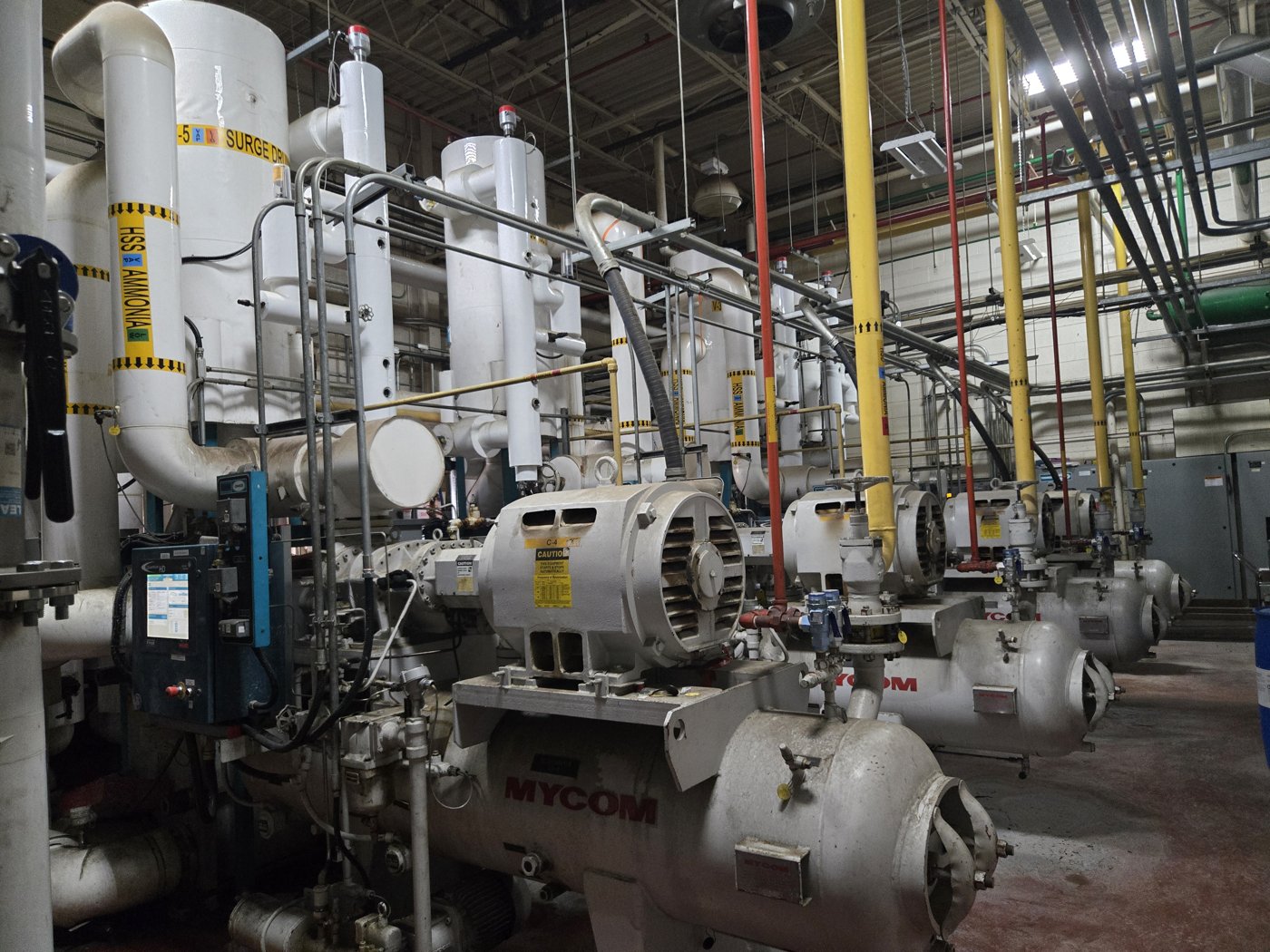
Three 500 HP fixed-speed ammonia screw compressors cool product across four lines at this 24/7 beverage bottling facility. Site staff believed the system needed all of its installed capacity and was running optimally; nothing on site suggested otherwise. Capacity, slide-valve position, and discharge pressure data had never left the compressors' own controls, so Panevo interfaced directly with them and fed a year of that data into ioTORQ EMIS. The result was a different picture: a blended system COP of just 2.39 against a 4.64 full-load rating, with the system spending 71% of its time below 45% load and 24% of its time below minimum turndown, cycling a "false load" valve just to keep from short-cycling.
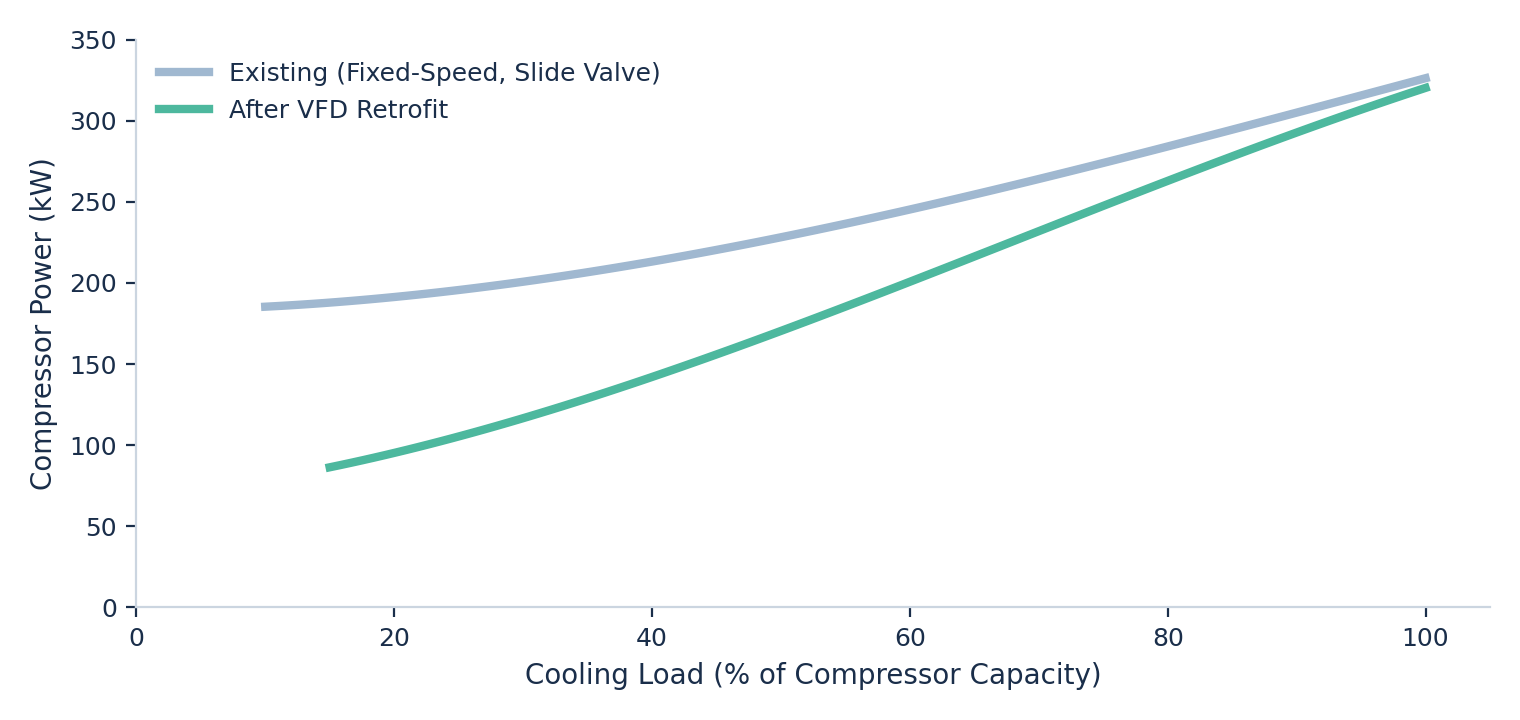
Modeled from metered data: Panevo fit cubic regression curves to a full year of metered compressor power and load data, then projected VFD performance using vendor curves. The largest gains fall below 50% load, where this system spends most of its time.
ioTORQ power submetering direct from the compressors: Capacity, slide-valve position, and discharge pressure data existed only inside the compressors' own control systems. Panevo interfaced with them directly and brought that data into ioTORQ, then combined it with 1-minute compressor power and glycol chiller data across a complete operating cycle to produce a baseline regression model with a 98.7% R-squared fit.
Two-option ECM comparison: Modeled both a compressor VFD retrofit and a new trim compressor against the metered load profile, quantifying energy, demand, and motor-start impacts for each before recommending a path forward.
Vendor-validated performance curves: Combined field-metered compressor data with variable-speed performance curves from the site's refrigeration contractor to project power draw across the full 15% to 100% load range.
M&V plan and incentive application: Built the feasibility study and M&V plan to IESO's SaveOnEnergy XLerate requirements. It was accepted without revision, clearing incentive funding in time for the retrofit to proceed ahead of the site's next Global Adjustment peak-demand window, and cutting payback from 4.4 to 1.9 years.
The data that mattered was locked inside the compressors: capacity, slide-valve position, and pressure signals existed only in the compressor control systems, inaccessible for analysis until Panevo interfaced with them directly and got that data flowing into ioTORQ EMIS.
Chronic underloading skewed simple comparisons: with load below 45% of capacity most of the year, off-the-shelf compressor ratings did not reflect real operating efficiency, so Panevo built custom cubic regression models of compressor power against load for the existing equipment and each proposed option.
Balancing two viable projects: a new trim compressor delivered more raw savings, but with a longer payback, more motor starts, and higher capital cost. Motor-start simulation and side-by-side project economics supported the lower-risk, faster-payback VFD retrofit instead.