
Natural Gas Procurement Optimization
Alberta · Heavy Equipment Sales, Rental & Service Operations
For years, this Canadian heavy equipment dealer secured its natural gas in Alberta through long-term, marketer-driven contracts. That approach maximized price certainty, but locked-in high utility costs. Panevo advised on its expiring Alberta gas procurement contract and renegotiated a new agreement, delivering roughly $250,000 per year in additional savings. As that new contract neared expiry, the client faced the same question again: how to structure the next deal to achieve both cost certainty and savings.
Market utility pricing is inherently unpredictable over a multi-year horizon. Weather, storage levels, market interconnectivity and global events all impact available prices. That volatility is why procurement requires a comprehensive understanding of market fundamentals, knowledge of both supply and end-use demand patterns, and active management throughout the contract term and beyond.
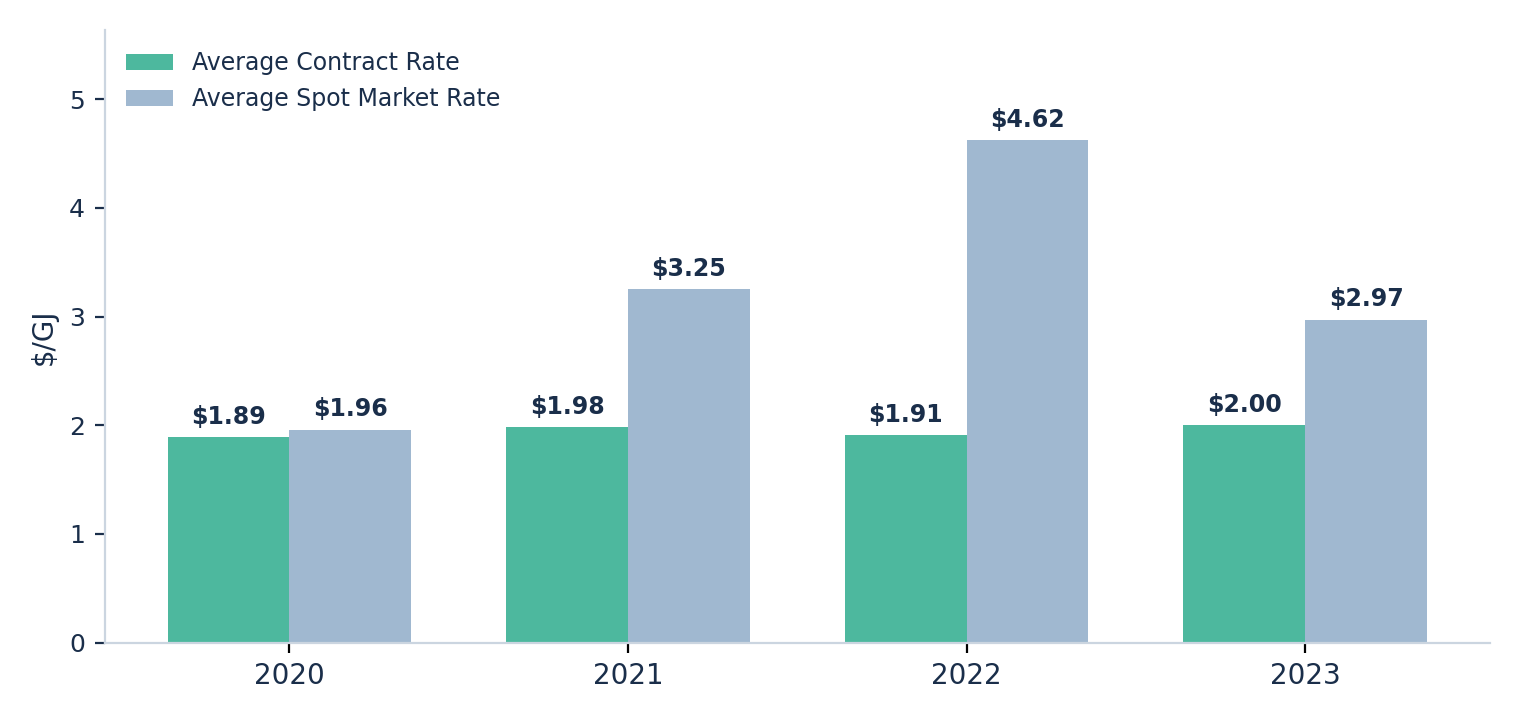
Verified, not projected: a full-term reconciliation of contract pricing against the spot market shows the fixed rate held steady while spot prices moved from near cost parity in year one to more than three times higher at the 2022 peak, before moderating as the market eased.
Independent, no-cost market representation: Advised as an independent engineering firm with no stake in which retailer or contract was chosen, unlike a gas or electricity marketer selling its own supply.
Engineering-led contract sizing: Sized the load-following volume and term length around each facility's actual consumption profile and distinct energy inputs, rather than a generic utility-side volume estimate.
Standardized, competitive vendor comparison: Requested pricing from multiple retailers under the same process and load assumptions, operating a fair, competitive process to ensure best price for the end-customer and avoid complicated offerings from multiple vendors.
Maximizing contract length: Negotiated the longest fixed-price load-following term the retailer would offer, taking advantage of unprecedented low long-term rates, maximizing what was on offer from the vendor.
Rolling in portfolio growth: Extended the same locked-in rate to additional facilities added to the program over time, capturing scale without renegotiating the agreement from scratch.
A rate that briefly lagged the market: initial spot market rates were lower than the negotiated rate, however this is expected at the beginning of any deal, with the foresight that over multiple years the agreement would prove cheaper than spot rates or other contract lengths on offer.
Committing to the maximum available term: the agreement was negotiated to extend further than generally on offer by the chosen marketer; this required legal review and agreement by both parties, but was eventually accepted and locked in significantly lower pricing for as long as contractually possible.